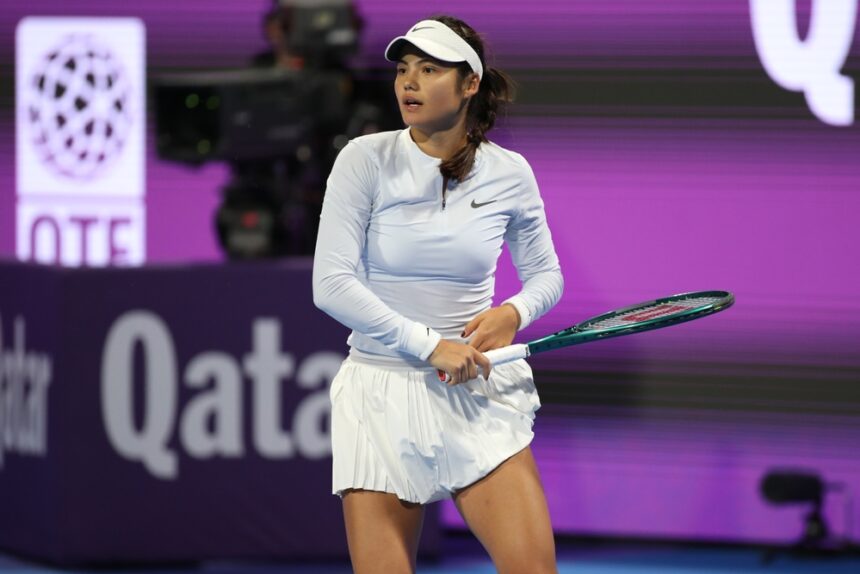
Emma Raducanu finds herself at another crossroads in her turbulent professional journey. The British tennis sensation has parted ways with coach Francisco Roig following a disappointing second-round exit at the Australian Open, marking yet another chapter in her increasingly chaotic coaching carousel. At just 23 years old, Raducanu is approaching double figures in coaching relationships, a staggering statistic that has left tennis royalty questioning who truly controls her career decisions.
The split with Roig came swiftly after Raducanu’s Melbourne campaign ended in frustration. Despite defeating Mananchaya Sawangkaew in her opening match, the British number one fell to Anastasia Potapova in the subsequent round, triggering another coaching breakup that has become disturbingly routine in her young career.
Tennis Legend Questions Decision-Making Process
Four-time Grand Slam champion Kim Clijsters has emerged as a prominent voice challenging Raducanu’s revolving door approach to coaching. Speaking candidly on the Love All podcast, Clijsters expressed bewilderment at the pattern unfolding before the tennis world.
The Belgian legend raised penetrating questions about the power structure surrounding Raducanu’s career. Who actually makes these decisions? Is Raducanu herself pulling the trigger on these splits, or are agents and parents pushing buttons behind the scenes? These questions strike at the heart of a troubling pattern that threatens to derail a once-promising career.
Clijsters compared Raducanu’s situation to a struggling soccer club that panics after a few bad results, immediately firing the manager despite having just hired them. This football analogy perfectly captures the short-term thinking plaguing Raducanu’s development. Great coaches need time to implement technical changes, develop tactical game plans, and build trust with their players. None of this happens overnight.
The Roig Connection and What Could Have Been
The brevity of Raducanu‘s partnership with Roig feels particularly wasteful given the Spaniard’s impressive credentials. Roig only joined Team Raducanu in August 2025, giving him barely six months before being shown the exit. His resume speaks volumes about what Raducanu is throwing away with each hasty decision.
Roig spent years in Rafael Nadal’s coaching corner, helping the Spanish legend capture 16 of his 22 Grand Slam titles. That level of success requires patience, trust, and long-term commitment from both player and coach. The partnership between Nadal and Roig demonstrates exactly what Raducanu is missing: stability and sustained collaboration that allows for gradual improvement rather than constant disruption.
A Growing List of Abandoned Partnerships
Raducanu’s coaching history reads like a speed-dating experiment gone wrong. Nick Cavaday and Mark Petchey represent just two names on an ever-expanding list of former mentors. Most notably, she won the 2021 US Open under Andrew Richardson’s guidance, a triumph that announced her arrival on the global stage and promised greatness ahead.
That magical run in New York remains her sole WTA title to date, a haunting reminder of potential unfulfilled. Richardson’s departure shortly after that historic victory set the tone for everything that followed. Since lifting that trophy at Flushing Meadows, Raducanu has cycled through coaches at an alarming rate, each change seemingly moving her further from recapturing that championship form.
Finding Form in Romania
Despite the chaos swirling around her coaching situation, Raducanu has shown flashes of resilience. She returned to winning ways at the Transylvania Open in Cluj-Napoca, defeating Greet Minnen in her first match since the Roig split. As the top seed at this WTA 250 event, Raducanu now faces Kaja Juvan in the round of 16, carrying the weight of expectations and uncertainty in equal measure.
Currently ranked 30th in the world, Raducanu possesses undeniable talent. Her shot-making ability, court coverage, and competitive spirit remain evident. However, talent alone cannot sustain a successful professional career. The technical refinements, strategic adjustments, and mental fortitude required to compete consistently at the highest level demand time and expert guidance.
The Path Forward Requires Commitment
Clijsters emphasized the importance of pushing through difficult peri ods rather than abandoning ship at the first sign of trouble. Building a successful coaching relationship requires weathering storms together, learning from setbacks, and maintaining faith in a shared vision. Quick fixes and constant restarts prevent the deep work necessary for sustained excellence.
Raducanu must eventually commit to a long-term coaching partnership if she hopes to fulfill her immense potential. The question remains whether she possesses the maturity and patience to see that process through, or whether external pressures will continue driving premature changes. Her career trajectory hangs in the balance, dependent on finding not just the right coach, but the right mindset to make any partnership succeed.
The tennis world watches with curiosity and concern as Raducanu navigates this critical juncture. Her next coaching hire will reveal much about whether she has learned from past mistakes or remains trapped in a destructive cycle of her own making.
Source: Tennishead